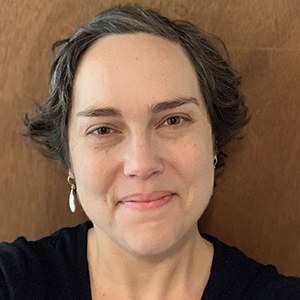
Cecili Thompson Williams is executive director of Beyond the Bomb, leading a team of campaigners and activists to mobilize against the threat of nuclear war and weapons. Cecili has nearly two decades of experience leading mission-driven campaigns with organizations including Amnesty International USA, RESULTS Educational Fund, and the National Partnership for Women & Families. Most recently she founded and served as chief strategist for We Divine Water, a consulting group helping smart and passionate changemakers build strategic and effective campaigns. A strong believer in continually building power and capacity, Cecili has trained thousands of campaigners on how to maximize their impact within their organizations and in the world at large. She also serves as a faculty member at the Center for Social Design at the Maryland Institute College of Arts, where she teaches a graduate seminar on campaign strategy. She is a former N Square Innovators Network fellow.
Biggest untapped opportunity to help advance a world safe from nuclear threat →
Unleashing the huge latent potential present across our movement that isn’t yet being leveraged—both by continuing to engage and gather professionals in our space and by exposing nuclear professionals to innovation and creative solutions that are happening outside of the nuclear space
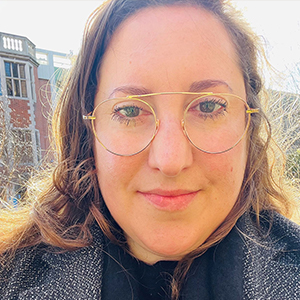
Chloë Barker is a research associate at Newcastle University and co-investigator of the project “Turning Fylingdales Inside Out: Making Practice Visible at the UK’s Ballistic Missile Early Warning and Space Monitoring Station,” where her focus is developing ways to engage non-specialist audiences in the station’s archive material and raise questions regarding nuclear deterrence and its cultural legacy. Her work previously focused on developing exhibitions making public for the first time materiality from the Fylingdales archive. Prior to that, Chloë spent 10 years working at cultural organizations ranging from Turner Contemporary to BALTIC Centre for Contemporary Art. She also served as assistant producer on the BBC Four Arena film “A British Guide to the End of the World.” She holds a master’s in exhibition studies from Central Saint Martins UAL and a bachelor’s in fine art from Chelsea College of Art and Design UAL.
Biggest untapped opportunity to help advance a world safe from nuclear threat →
Collaborating with the climate justice and school climate strike movement, and building on campaigns that seek to change our shared future
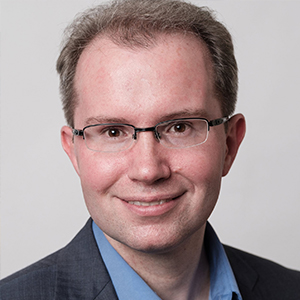
Dr. David A. Bray has served in a variety of leadership roles in turbulent environments, including bioterrorism preparedness and response from 2000 to 2005, time on the ground in Afghanistan in 2009, serving as nonpartisan executive director of a bipartisan National Commission on R&D, and providing leadership as a nonpartisan federal agency senior executive. From 2017 to the start of 2020, David was executive director of the People-Centered Internet (PCI) coalition, chaired by internet co-originator Vint Cerf. Later he was invited to work with the US Navy and Marines on improving organizational adaptability and with US Special Operation Command’s J5 Directorate on the challenges of countering misinformation and disinformation online. In 2016, Business Insider named him one of the top “24 Americans Who Are Changing the World” under 40; he was also named a Young Global Leader by the World Economic Forum. In 2019, David accepted a leadership role in incubating a new global center with the Atlantic Council. He has received both the Joint Civilian Service Commendation Award and the National Intelligence Exceptional Achievement Medal. He is a former N Square Innovators Network fellow.
Biggest untapped opportunity to help advance a world safe from nuclear threat →
Reshaping narratives and multinational awareness—both practical and policy-oriented—to address these challenges globally
Carl is currently an advisor to Longview Philanthropy while traveling in Kenya as part of a family gap year. For more than a decade, Carl led grant making in nuclear security at the Carnegie Corporation of New York, a philanthropic fund which grants over $30 million annually to strengthen international peace and security. Carl previously worked with The Century Foundation and the Global Security Institute, where his research spanned arms control, international security policy, and nonproliferation. He is also cofounder of Interlude Artist Residency which supports a flourishing practice for visual artists who are actively parenting.
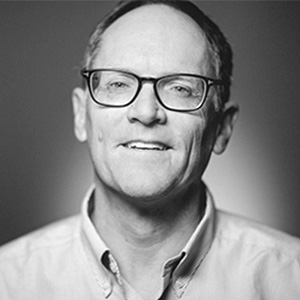
Bruce is director of policy and global security at Skoll Foundation. Previously he led Skoll Global Threat Fund’s nuclear nonproliferation and Middle East work and spent nearly a decade in the technology sphere with Oracle and Novell. Bruce began his career in the US State Department, serving in Saudi Arabia, Swaziland, Italy, and in Washington, DC, working on, among other initiatives, the G-7 process, peace in the Middle East, and nuclear safety. He holds a BA in international relations from Pomona College and an MA in international affairs from Johns Hopkins.
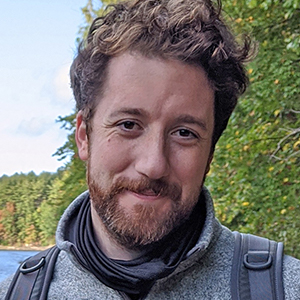
Andrew is the publishing manager at the Belfer Center for Science and International Affairs, a policy-focused think tank at Harvard Kennedy School. He specializes in producing academic works for print and digital publication, designing original data visualizations, and managing the Center’s brand. Andrew is also active in the field of nuclear weapons education, serving as teaching assistant for various graduate classes in Harvard’s nuclear deterrence certificate program and giving occasional lectures on technology, history, and cultural issues. Much of his work focuses on American nuclear policy through a historical lens, public education and activism, and how the presence of nuclear weapons affects society broadly. He has been featured in outlets such as The Boston Globe, The Hill, BBC Newsday, Arms Control Today, and Bulletin of the Atomic Scientists, and has spoken on the BBC World Service. A former N Square fellow, Andrew holds a bachelor’s degree from Boston University and a master’s in international relations from Harvard Extension School. His thesis explored a unique dimension of Mao Zedong’s ideology and the longlasting normative influence those beliefs had on China’s future nuclear policy choices.
Biggest untapped opportunity to help advance a world safe from nuclear threat →
In the current cultural moment, synergies and partnerships between movements are more important than ever; there are potentially powerful intersections with existing movements in justice, environment, economics, and more. Articulating these intersections and making key connections will be the most important (and longest-lasting) bottom-up work that we can do.