Julia has more than 30 years of experience working for democratic change and conflict transformation around the world, and is best known for her ability to convene diverse coalitions and her facilitative leadership of global networks. Throughout her career she has been called upon to translate between theory and practice, while seeding new approaches, organizing principles, and mindset shifts for social change. After serving for almost 14 years as the President and CEO of PartnersGlobal, one of the preeminent international democracy and peacebuilding organizations – in 2022 Julia launched The Horizons Project to focus on the intersection of peacebuilding, social justice, and democracy in the United States. In her role as Chief Network Weaver there, Julia is committed to bridge-building across sectors, disciplines, and cultures. Julia also serves as board chair of the Alliance for Peacebuilding.
Biggest untapped opportunity to help advance a world safe from nuclear threat →
Building out broader constituencies for the mission, connecting to other adjacent movements, and continuing to support culture change against militarized solutions, diplomacy, and multilateralism (i.e., breaking down silos and helping build a network of networks)
Mbazor Jeremiah Chinonso is a nuclear engineer with a decade of experience in the field. Jeremiah’s research has spanned different areas, including the security of nuclear power plants in the decommissioning stage. He has also led youth groups to promote nuclear technology in Africa and globally. Born and raised in Nigeria, he also lived and studied in South Korea for more than half a decade. His goal is to see that the application of civil nuclear technology is safe, secure, and reliable for a better life.
Biggest untapped opportunity to help advance a world safe from nuclear threat →
Engaging youth; creating a regional index of security; developing a contributory scheme to show countries’ commitment to nuclear security, because a nuclear security threat anywhere is a nuclear security threat everywhere.
Elizabeth Kistin Keller is a systems analyst at Sandia National Laboratories, where she leads the Labs’ Strategic Futures Program. Her work is currently focused on the future of hyperconnectivity and analysis and design for strategic initiatives on climate security, cybersecurity, and crisis decision support. Before joining Sandia, Elizabeth spent several years working on water conflict and cooperation in North America, Southern Africa, and South and Southeast Asia. Born and raised in Albuquerque, New Mexico, Elizabeth received her BA in political science and Latin American studies as a Morehead-Cain Scholar at the University of North Carolina-Chapel Hill and her master’s and PhD in international development studies (a combination of political science, economics, and anthropology) as a Rhodes Scholar at Oxford University. She is a member of the Association of Professional Futurists and an adjunct professor in the University of New Mexico’s Department of Geography and Environmental Studies. Elizabeth was a fellow in N Square’s inaugural Innovators Network cohort.
Biggest untapped opportunity to help advance a world safe from nuclear threat →
Great question and one I won’t do justice to here, but I think there are tremendous opportunities for continuing to expand the network and deepen the collaborative relationships and efforts underway.
Ed Finn is the founding director of the Center for Science and the Imagination at Arizona State University, where he is an associate professor in the School for the Future of Innovation in Society and the School of Arts, Media, and Engineering. He also serves as the academic director of Future Tense, a partnership between ASU, New America, and Slate Magazine, and co-director of Emerge, an annual festival of art, ideas, and the future. Ed’s research and teaching explore the workings of imagination, digital culture, creative collaboration, and the intersection of the humanities, arts, and sciences. He is the author of What Algorithms Want: Imagination in the Age of Computing (MIT Press, 2017) and co-editor of several other books, including Future Tense Fiction (Unnamed Press, 2019), Frankenstein: Annotated for Scientists, Engineers, and Creators of All Kinds (MIT Press, 2017), and Hieroglyph: Stories and Visions for a Better Future (William Morrow, 2014). He holds a PhD in English and American literature from Stanford University and a bachelor’s degree from Princeton University. Before graduate school, Ed worked as a journalist at Time, Slate, and Popular Science.
Biggest untapped opportunity to help advance a world safe from nuclear threat →
Seeing global security as a narrative challenge rather than a policy problem
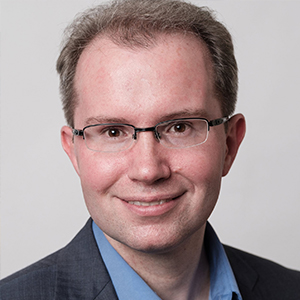
Dr. David A. Bray has served in a variety of leadership roles in turbulent environments, including bioterrorism preparedness and response from 2000 to 2005, time on the ground in Afghanistan in 2009, serving as nonpartisan executive director of a bipartisan National Commission on R&D, and providing leadership as a nonpartisan federal agency senior executive. From 2017 to the start of 2020, David was executive director of the People-Centered Internet (PCI) coalition, chaired by internet co-originator Vint Cerf. Later he was invited to work with the US Navy and Marines on improving organizational adaptability and with US Special Operation Command’s J5 Directorate on the challenges of countering misinformation and disinformation online. In 2016, Business Insider named him one of the top “24 Americans Who Are Changing the World” under 40; he was also named a Young Global Leader by the World Economic Forum. In 2019, David accepted a leadership role in incubating a new global center with the Atlantic Council. He has received both the Joint Civilian Service Commendation Award and the National Intelligence Exceptional Achievement Medal. He is a former N Square Innovators Network fellow.
Biggest untapped opportunity to help advance a world safe from nuclear threat →
Reshaping narratives and multinational awareness—both practical and policy-oriented—to address these challenges globally
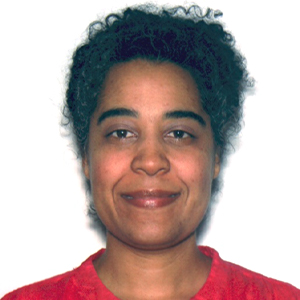
Bernadette Cogswell is a research scientist at the Virginia Tech University Center for Neutrino Physics. She was previously a Dame Kathleen Ollerenshaw Fellow at the University of Manchester’s School of Physics and Astronomy and a postdoctoral research associate at Princeton University’s Program on Science and Global Security. She works on technical and policy issues at the intersection of particle physics and nuclear nonproliferation. Bernadette is also an associate editor for the journal Science & Global Security. Her current research focuses on antineutrino detectors for treaty verification and safeguards and issues surrounding plutonium disposition.
Biggest untapped opportunity to help advance a world safe from nuclear threat →
The area where I still see too little change in nuclear security work is in the lack of cross-disciplinary research teams doing nuclear threat reduction projects—teams made up of social and physical scientists along with great communicators and visualizers partnering on key issues related to nuclear threat reduction. Nuclear weapons are inherently technical but, I believe, at heart a social problem. We can’t “science away” nuclear weapons as they touch on value systems and fundamental beliefs about power and security that are personal, not technical. So a cross-team approach is a must to really understand why certain things work the way they do (or are proposed, such as nuclear monitoring schemes) and how to go about improving them. I think N Square, because it sits outside the traditional funding and dialogue silos of government, academia, and national labs, has an opportunity to really promote this kind of interdisciplinary work as the gold standard, rather than the quirky one off.